UNCOATED AND INDISPENSABLE
ROBUST, SCRATCH-RESISTANT AND DURABLE
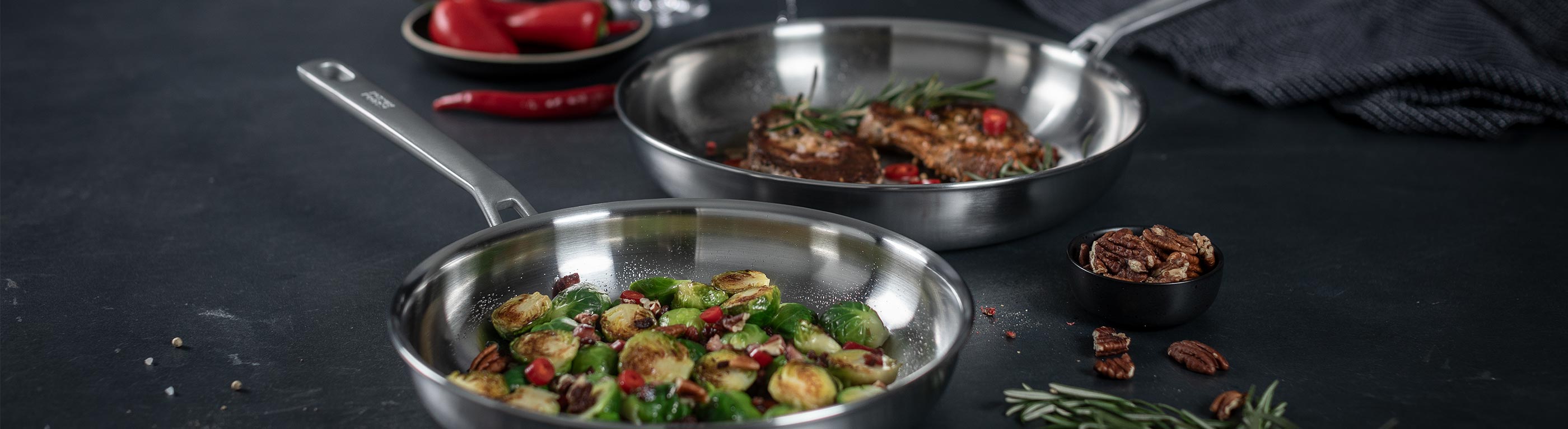
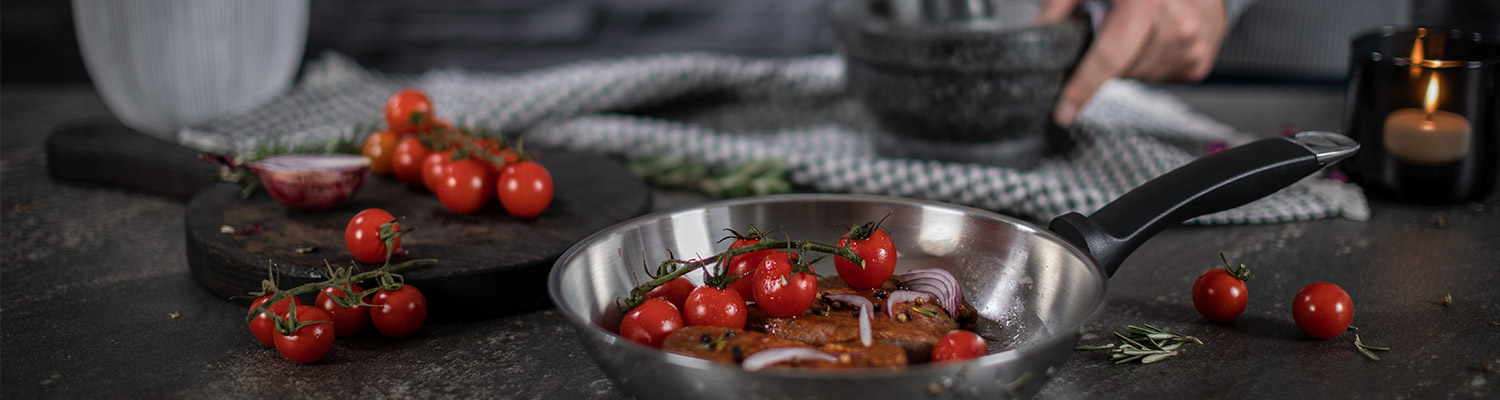
Uncoated frying pans allow for a quick sear, enhancing the rich roasted flavors of juicy steaks or aromatic vegetables. With some practice, even more delicate dishes like crêpes turn out perfectly.
THE UNIVERSAL FRYING PAN DOES NOT EXIST
A SINGLE FRYING PAN FOR EVERYTHING?
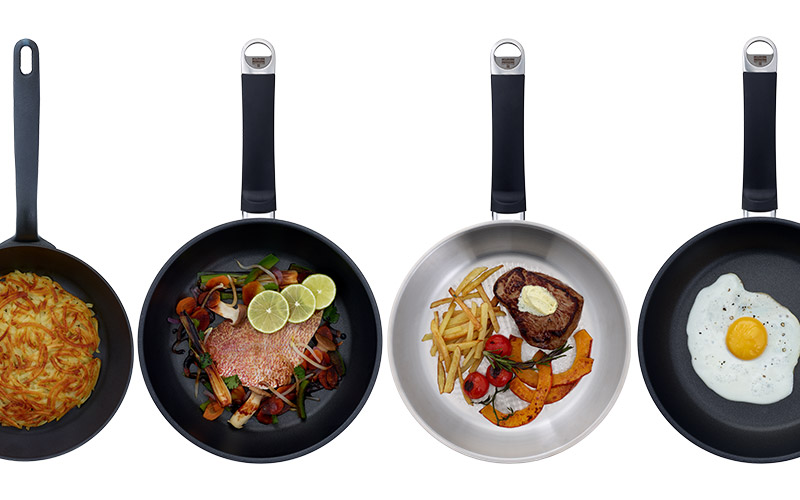
Unfortunately, that's a myth... A frying pan must meet various technical requirements.
Similar to sports, a single frying pan cannot be the best in all disciplines. One excels in heat distribution, another in ease of maintenance. One has excellent non-stick properties, while another can be heated to very high temperatures. Each frying pan has its own unique strengths.
Nevertheless, the uncoated frying pan offers more than you might think.
In our frying pan booklet, you will find all the information, differences, and tips on all types of frying pans.
STAINLESS STEEL OR IRON?
UNCOATED STAINLESS STEEL
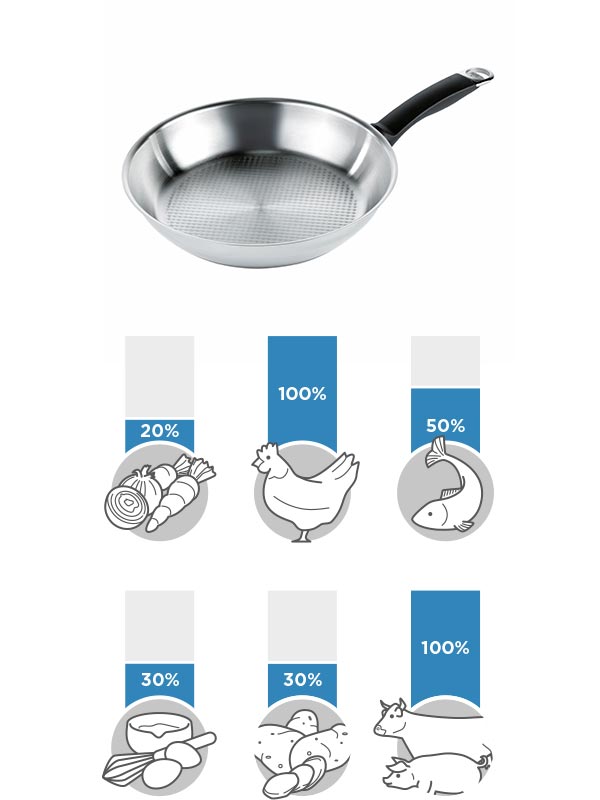
The frying pan for meat – This uncoated frying pan can withstand high temperatures be heated and is suitable therefore particularly good for spicy roasting meat and poultry.
For crispy frying meat, vegetables, and egg dishes (only with sufficient oil/fat).
UNCOATED IRON
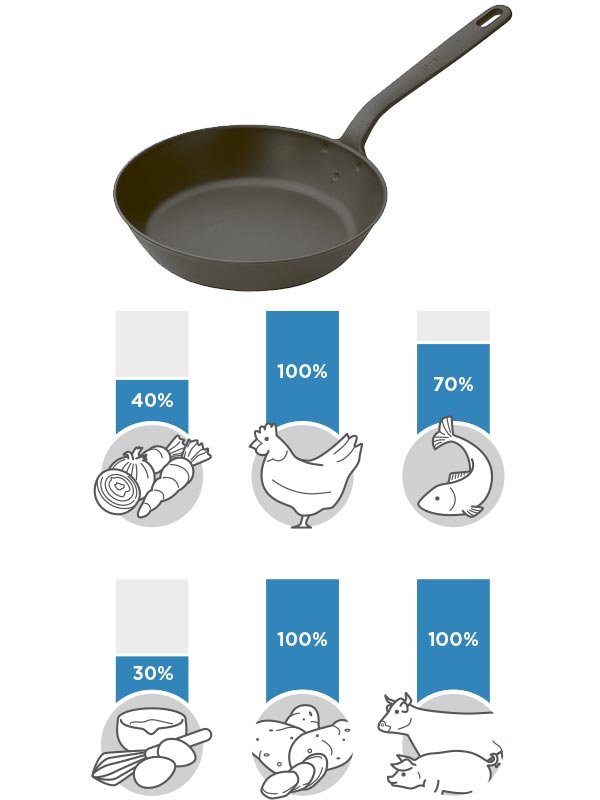
The professional frying pan for discerning cooks – A very robust frying pan with excellent heat distribution. It forms after develops a patina with repeated use, which acts like a non-stick coating
For crispy frying of meat, poultry, potatoes, and fish..
BROWNING MEAT
CRISPY ON THE OUTSIDE, JUICY ON THE INSIDE
HOW TO COOK THE PERFECT PIECE OF MEAT
PROCEDURE
-
Heat the pan to about ¾ of the stove's power.
-
Perform a heat test → Spray a little water into the pan; if the water droplets dance around, the correct temperature has been reached.
-
Add oil or fat to the pan.
-
Place the unseasoned meat (at room temperature) in the pan.
-
Only turn when it comes away from the pan by itself after 2-3 minutes. Do not try to pry the meat off with force.
-
It is best to use tongs or a spatula to turn the meat – do not pierce it with a fork, as this will cause the juices to escape.
-
After turning, reduce the heat to ½ of the maximum setting. Wait again until the meat loosens on its own.
-
Season the meat only at the end.
-
For sauces, deglaze the pan with wine or broth and prepare a sauce. This will allow the browned bits to easily come away from the bottom of the pan.
NOTE
This procedure is not suitable for the liver.
CLEANING
Remove the meat from the pan and cover the bottom with hot water. If the pan is very dirty, add a little washing-up liquid to the water. Remove the pan from the heat and leave to soak. The pan can be cleaned easily after eating.
NOW IT'S GETTING DELICATE
Did you know that ...
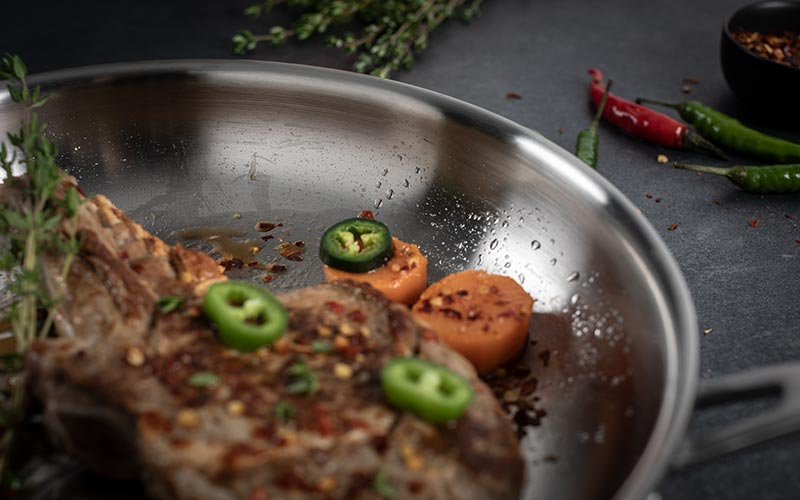
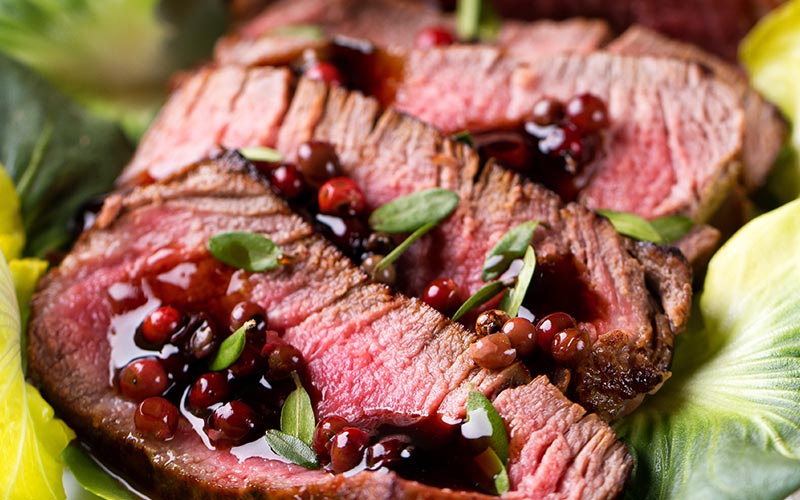
... You can cook even the most delicate foods perfectly in your uncoated stainless steel pan? With a little knowledge and practice, you'll soon be frying aromatic vegetables and making the finest crêpes. We'll show you how!
VEGETABLES
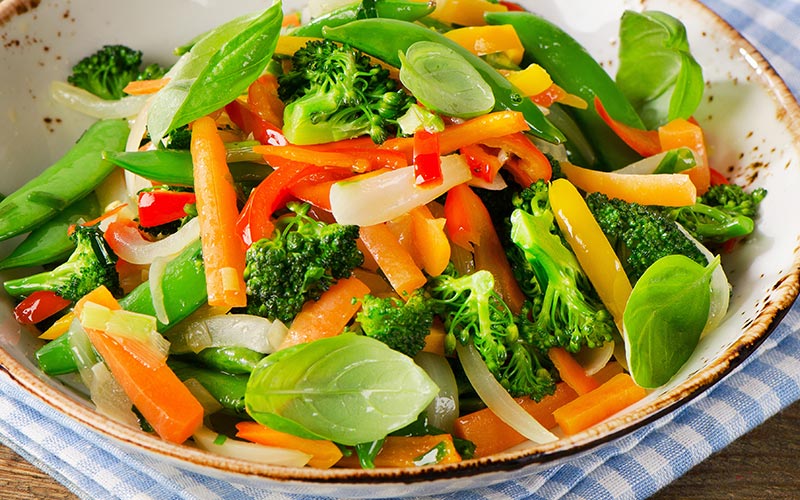
PROCEDURE
» Heat an empty pan to ¾ of the maximum cooking temperature.
» Add oil to the pan so that there is a thin layer between the bottom of the pan and the food. Alternatively, the vegetables can be marinated in oil.
» Chopped vegetables add to the pan in portions so that the bottom is not overfilled and Keep moving by swirling or using a spatula.
» Vegetable slices such as zucchini or eggplant place them side by side in the pan and leave them until they come away on their own.
» Season vegetables only at the end.
NOTE
Depending on your stove, it may be necessary to adjust the temperature slightly.
ROASTING INSTEAD OF STEAMING
Too much water causes the temperature in the pan to drop and the vegetables will steam instead of fry. Therefore:
» Add the vegetables to the pan as dry as possible.
» Smaller portions lose less water
» Season vegetables only at the end
CRÊPES
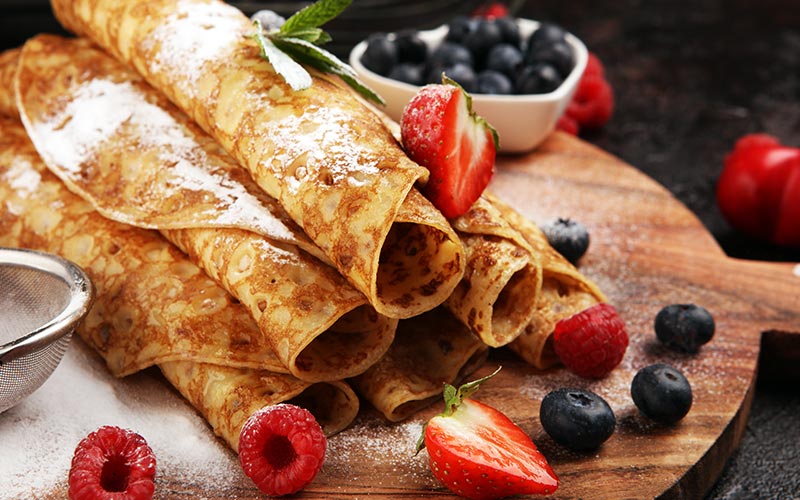
PROCEDURE
» Heat an empty pan to ¾ of the maximum cooking temperature.
» For each omelet/crêpe, add about ½ tablespoon of butter to the hot pan.
» Spread the butter evenly with a silicone brush (including the edges)
» Reduce heat to ½ of maximum cooking setting.
» Add about a ladleful of batter to the frying pan.
» Swirl the pan so that the entire bottom is covered with a thin layer of batter.
» approx. during 1.5 Bake for up to 2 minutes until the underside is lightly browned.
» Flip the crêpe/omelet using a spatula.
» Bake the second side briefly.
NOTE
Depending on your stove, you may need to adjust the temperature slightly. If the crêpe or omelet browns too quickly or too slowly, increase or decrease the heat accordingly.
COURAGE TO USE AN UNCOATED PAN
ADVANTAGES OF UNCOATED FRYING PANS



WONDERFUL WAFFLE BASE
ROASTING WITHOUT STICKING
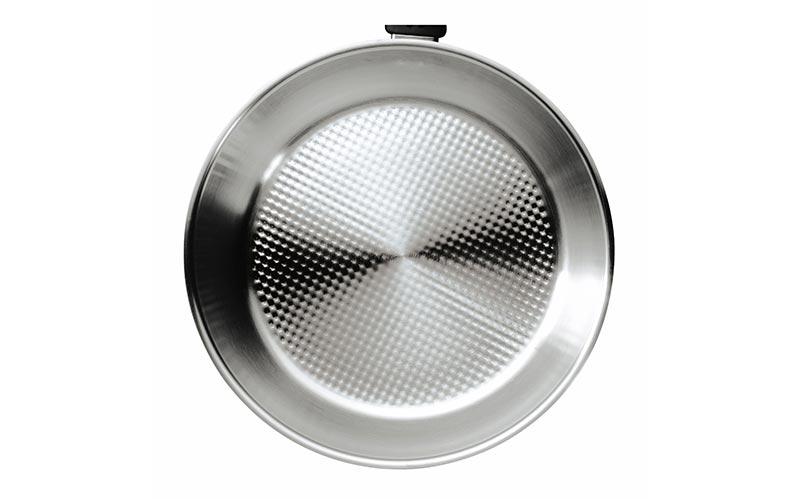
The innovative sandwich base construction with aluminum core in the frying pans ensures extremely good heat distribution and even frying results. Thanks to the honeycomb-shaped waffle base in our SILVER STAR line, fat or oil is distributed evenly when heated—for low-fat frying and better protection against sticking..
Uncoated frying pans require a little practice. However, the waffle base of our SILVER STAR pans makes low-fat frying without sticking particularly easy. This makes uncoated frying pans ideal for anyone who wants to get the full flavor and texture out of their ingredients.
CLEAN PROPERLY
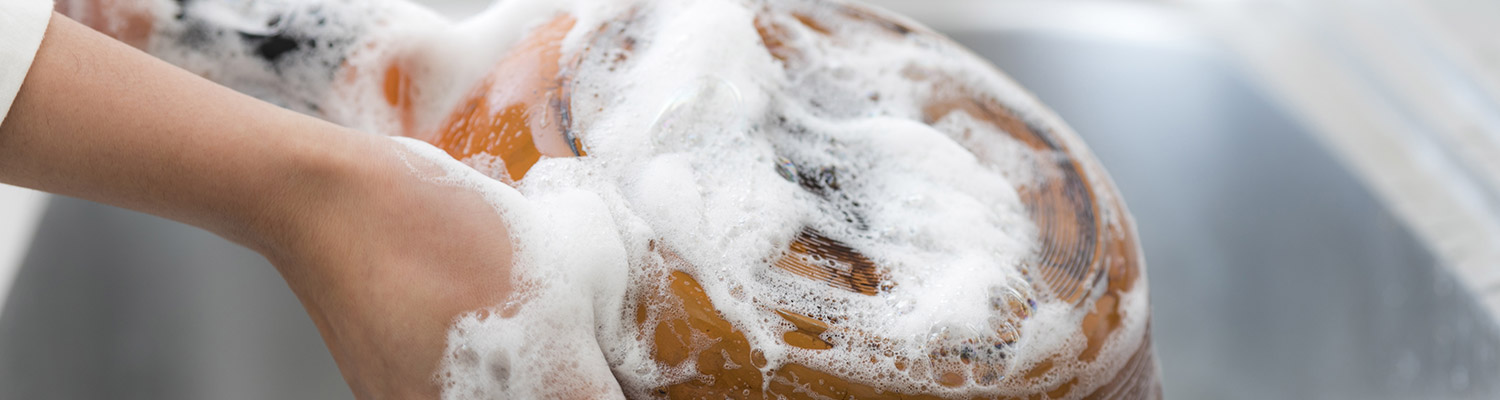
Cleaning an uncoated stainless steel or iron frying pan is a little more time-consuming than cleaning a coated frying pan. Here you can find out how to clean your frying pan properly. It's well worth the effort.
CLEANING UNCOATED STAINLESS STEEL FRYING PAN
Uncoated pans are considered difficult to clean, as burnt-on residues can stick stubbornly without a non-stick coating. However, with the right approach, cleaning is usually straightforward:
» After frying: Immediately soak the pan with a little dish soap and warm water.
» For more stubborn encrustations: Sprinkle baking powder on the bottom of the pan, add a little water, and heat briefly. After about an hour, any residue can be easily removed.
» Tip: The cleaner and more scratch-free the surface, the lower the adhesion during the next use.
Good to know: Uncoated pans are dishwasher safe.
CLEANING AN IRON FRYING PAN
Unlike stainless steel pans, iron pans are susceptible to rust. To protect them from corrosion, they have a baked-on patina—a greasy, water-repellent layer that must be preserved at all costs.
Therefore, the following applies when cleaning:
» Do not use detergent or water to avoid damaging the patina.
» If the pan has been cleaned with water and dish soap, it must be seasoned again (see instructions: “Seasoning an iron pan”).
PROPER CARE
DEEP CLEANING WITH SWISS CLEANER
For particularly stubborn dirt, we recommend our stainless steel cleaner SWISS CLEANER – The tried-and-tested cleaning paste for burnt-on residues on uncoated pans.
How it works:
» Heat the pan briefly on a low heat (e.g. setting 1) – the heat activates the paste.
» Apply paste and rub in circular motions with a soft cloth or sponge.
» Repeat the process several times depending on the degree of soiling – with a little patience, even dark discoloration will disappear.
Soak with hot water, some dishwashing liquid or a vinegar-water mixture can further enhance the effect.